Plumbing leaks
Household supply pipes, connections and fixtures can release water inside a room or cabinet. The source and affected materials help determine the cleanup scope.
Indoor water cleanup
When a household pipe, fixture or appliance releases water indoors, the visible wet area may not show how far moisture has travelled. Prompt extraction and a careful moisture assessment help define the cleanup work.
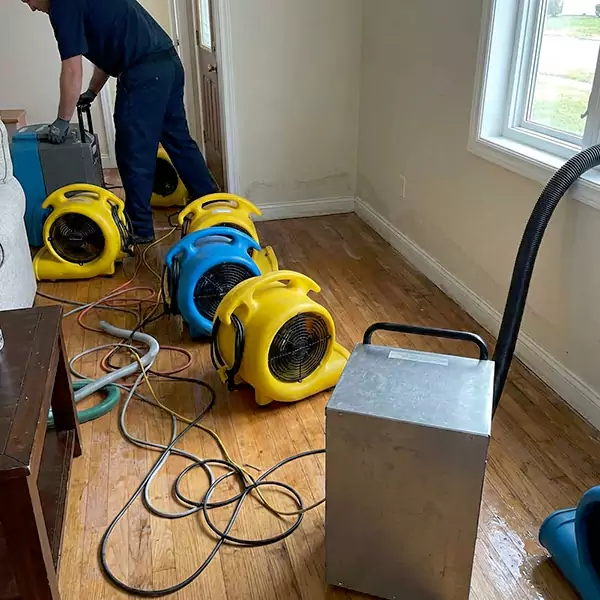
Indoor water cleanup at home
Water from a supported plumbing leak or fixture or appliance overflow can move under flooring, behind trim or into nearby materials. The affected surfaces and the time they stayed damp help guide assessment and drying.
Service scope and availability vary by participating provider and location.
Common work
Options depend on the home, the work involved and the participating provider.
Household supply pipes, connections and fixtures can release water inside a room or cabinet. The source and affected materials help determine the cleanup scope.
A sink, toilet, tub, washing machine or other household appliance can overflow indoors. Cleanup depends on where the water travelled and which surfaces became wet.
Removing standing water from suitable floor surfaces and materials is an early part of many indoor cleanup projects.
Moisture readings and observations help identify affected areas that may not look wet from the surface.
Air movement and dehumidification can help dry suitable building materials after extraction and assessment.
The cleanup plan can include moving affected contents, cleaning appropriate surfaces and checking conditions as drying progresses.

Extraction and drying
Extraction equipment removes water from suitable surfaces, while air movers and dehumidifiers support drying. The materials involved, affected area and moisture readings guide equipment placement and follow-up checks.
Questions and answers
Useful details to consider when discussing work for your home.
This page focuses on supported household plumbing leaks and fixture or appliance overflows inside the home.
Water can travel beneath flooring, into trim or through nearby materials. Moisture readings can help identify where drying is needed.
Timing depends on the materials, amount of water, room conditions and equipment plan. A provider can explain the expected checks for the affected area.
If safe and accessible, stop the source and keep clear of wet electrical equipment. Avoid disturbing affected materials until the area can be assessed.
Next step
Call to discuss extraction, moisture assessment, drying and cleanup for supported household sources.